
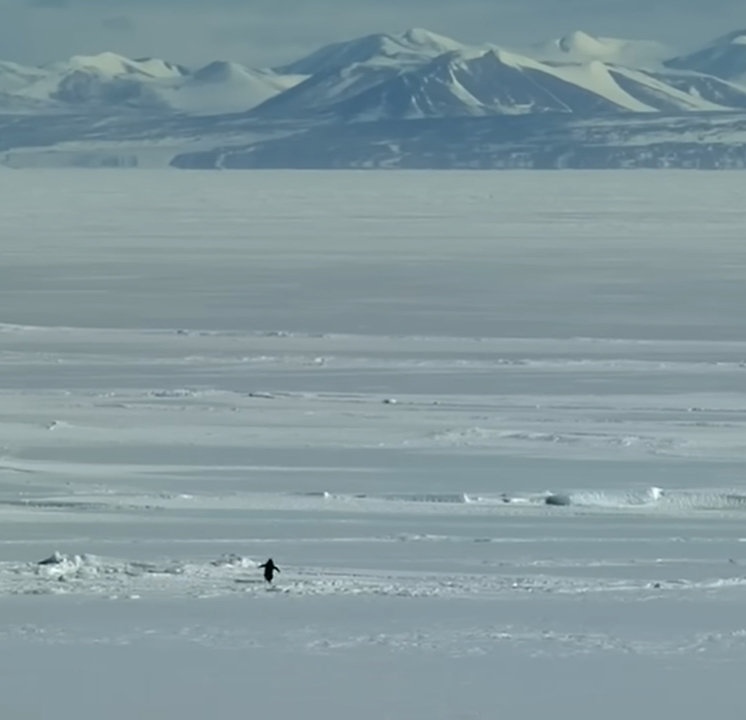
The Viral “Nihilist Penguin Death March”: Footprints in the Ice That Became a Blueprint for the Human Soul
How a viral penguin walk became a symbol of loneliness, courage, and the quiet rebellion of the human soul
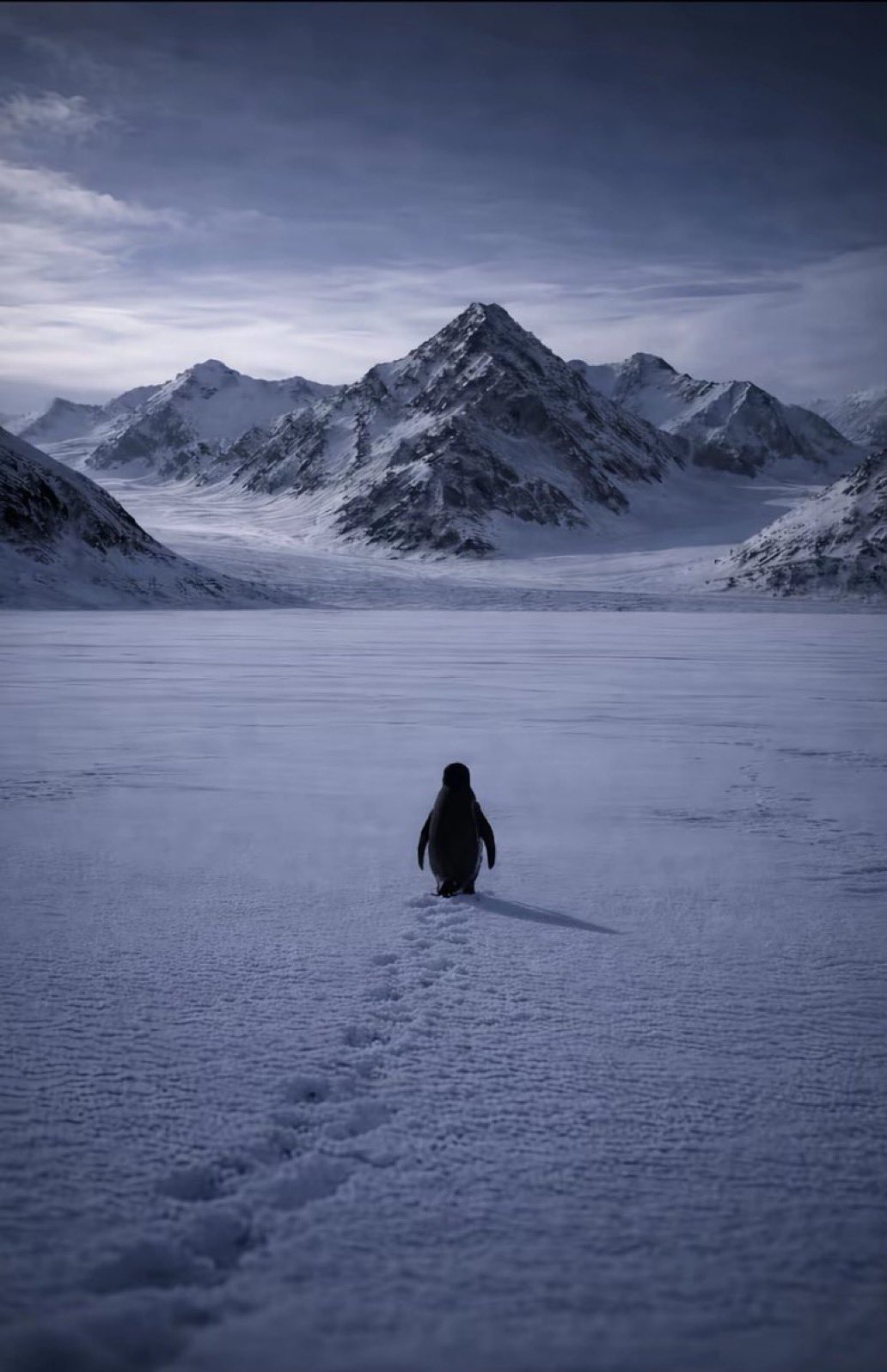
The loner penguin moving to the mountains of Antarctica, leaving behind its colony and its fellow penguins, has become the internet buzz lately.
The cute penguin became a Viral Sensation.
Internet users started calling the penguin:
A Nihilist
A Rebel
And a Symbol of independence
Someone who chose to walk alone even when it was hard.
When my Instagram feed flooded with videos of a penguin’s waddle toward the mountains, a destination where survival is impossible, I felt the urge to know more about it.
The videos that reached me spoke of how a penguin dared to leave its safe space, where it could survive, and move into the unknown.
The viral videos, with names like Nihilist Penguin Death March, Viral Penguin Meme, came with captions like:
• If nobody wants to go with you, go alone.
• A single penguin leaves the safety of its group, turning its back on food, warmth, and survival, walking instead toward an empty, frozen horizon.
• Even a penguin can teach us how powerful choice is and how sometimes purpose matters more than survival.
• The nihilist penguin reminds us — survival isn’t about wings, it’s about endurance.
People saw a little penguin inside themselves.
We all picked up the same emotion from the nihilist penguin clip, and it became the voice we were all wanting to express.
My mind was stuck on the penguin and the message it went viral for.
It touched something so deep in me that I wanted to dig a little deeper and write about it.
The Story behind the Viral Penguin ‘Death March’ — A 2007 Antarctic footage that became a Global phenomenon
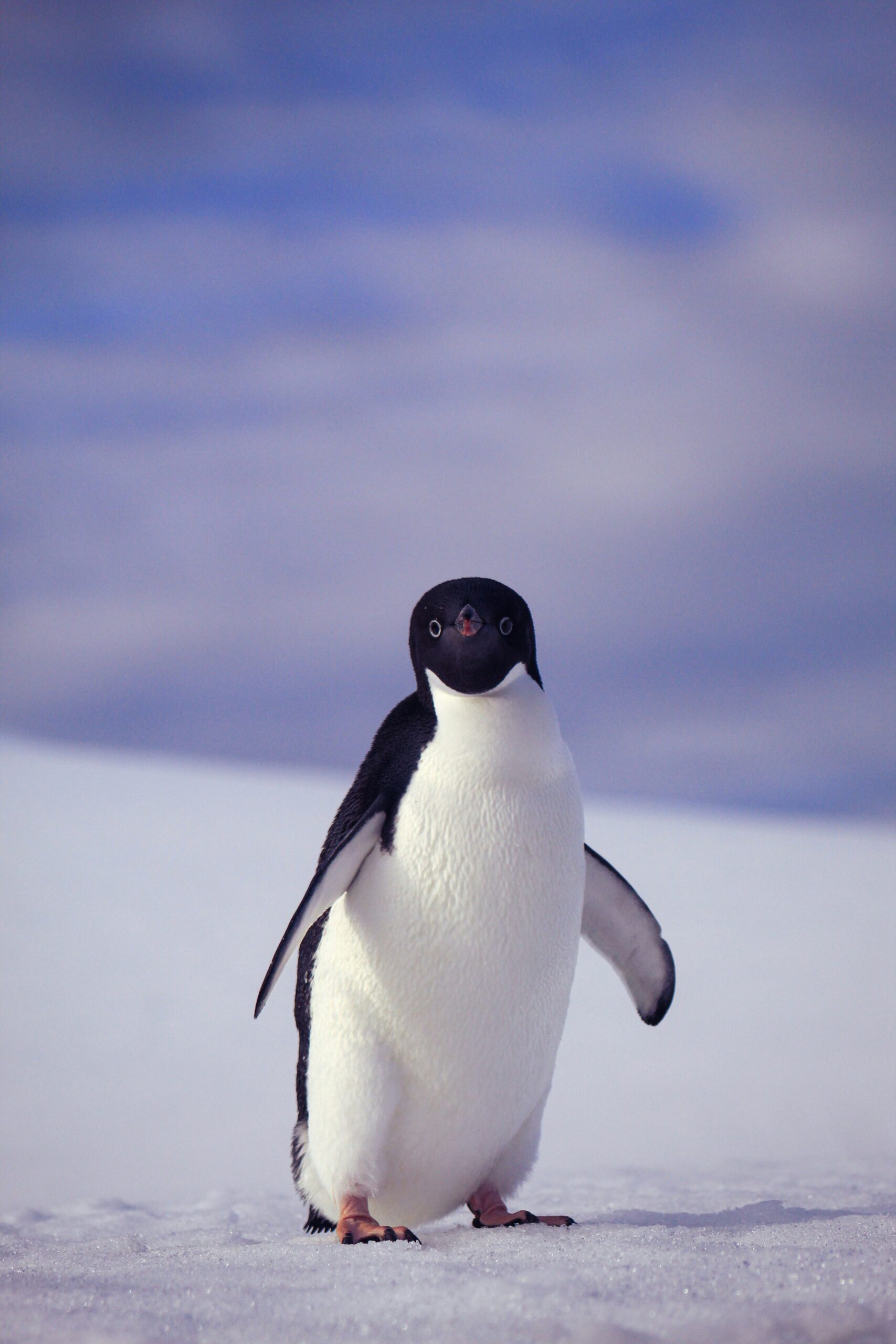
Viral nihilist penguin walking inland in Antarctica documentary footage
At the beginning of 2026, a short clip resurfaced after around 20 years across many social media platforms, turning it into a powerful meme about :
Detachment
The courage to pursue something, or
The urge to simply walk away.
The clip was originally released in 2007 as part of German filmmaker Werner Herzog’s documentary Encounter at the End of the World, which is about his journey in Antarctica and the experiences he had there, a film that explores what life is like in Antarctica.
In this documentary, something striking was captured:
An Aedile penguin straying from its coastal route and walking approximately 70 km inland.
No water.
No food.
No colony.
No survival.
Just ice, Vast silence, and a Dead end.
A waddle that seems to have no return which makes the clip extremely rare.
Normally, most penguins stay close to the sea, their colonies, and other penguins. But this individual marches alone across the ice, making this behavior rare and noticeable.
Herzog interpreted it as a “Death march,” as the penguin was unlikely to survive its inland trek.
This scene from the documentary has ignited discussions about the penguin’s behavior and has led to interpretations connecting it with human emotions.
Why the Viral Nihilist Penguin Walk went Global: The Emotional Reason behind the Meme
No one exactly knows what was going on inside the penguin.
It’s the penguin’s lonely march that struck a nerve.
When something becomes relatable, it becomes a universal human expression.
In an era where people are living with:
Unexpressed emotions
Filled with anxiety they find no pause from
Unfulfilled desires they have suppressed
Traumas and deep-seated wounds they haven’t healed from
Struggles that make them feel like failures, and
Responsibilities that have started to feel like burdens
This lonely march of the penguin gives them a sense of Redemption.
People projected their emotions onto the penguin’s walk.
They turned the penguin’s lonely march into an expression of their burnout, emotional fatigue, loneliness, or deep urge for solitude, an Escape from the chaotic world.
They saw it as a penguin walking away from its safe space, where everything was familiar, but PEACE WAS FADING.
It became a symbol of independence, rebellion, bravery, purpose, and courage.
The world saw the penguin as its inner voice.
One Instagram post came with an inspiring and empowering message from this penguin story:
Once there was a small penguin standing at the edge of a vast frozen land.
Everyone else was huddled together, afraid to leave the warmth of the group. The little penguin looked at the long, lonely path ahead and felt the cold wind on its face. It was scary to be the only one, but staying still felt even scarier.
So, the penguin took one step. Then another. With every step, the silence grew louder, but so did the strength inside its tiny chest. The journey was cold, quiet, and lonely, but it was also brave.
Because sometimes the path meant just for you will not be crowded.
Sometimes it will look empty so you can learn how strong your own wings and feet really are.
And that penguin learned something powerful. Going alone does not mean you are unwanted. It means you are chosen for a journey that requires courage before company.
🐧❄️@awaken_one
Social media came up with phrases like “the penguin knows” and “heading towards oblivion,” which reflect human interpretations rather than animal behavior.
This generation wears a splendid appearance on the outside, yet deep within, each soul is quietly fighting its own battle.
When this penguin’s daring decision to leave behind its colony, its food, and its comfort spoke to that hidden loneliness and burnout, something stirred inside people, a powerful urge to break their own shackles, just like the penguin did.
The penguin became a motivating force, encouraging people not to fear pursuing something just because it might make them an outlier.
Through the clip, people saw themselves as the lone penguin, each going through inner turmoil and wanting to make the brave move of walking away, even if it meant risking everything.
They did not see it as a lonely march, but a march toward oneself, an inward journey where truth is waiting.
🐧The penguin became a driving force for people to make the big decisions they had long been waiting and gathering courage for.
🐧The penguin became the breakthrough that helped people move past their mental barriers, showing that they had the key to break free all along.
Anything that stirs human emotion or sparks deep feelings becomes viral.
The meme turned a wildlife documentary moment into an expression of human psychology and that is what made it a viral sensation across the internet.
What the viral ‘Death March’ penguin clip actually shows
The loner penguin did not become viral on its own, it’s the human interpretation and the projection of human emotions onto it that touched millions of souls. Sometimes what moves us isn’t the event itself, but the old emotional memories it quietly awakens within us.
The penguin might not have the same story that humans have imagined.
The lonely march that looked like an act of rebellion likely has no real connection to the penguin’s emotions.
Researchers say the nihilistic symbolism emerging on the internet and actual animal behavior are two very different things.
Scientists describe this as an unusual movement pattern in penguins.
Penguins navigate with the help of environmental signals, and when something interferes with these cues, they can become misled. This can result in an unusual movement that causes a penguin to stray from familiar routes.
The most probable reasons and explanations for these unusual patterns are:
- Disorientation: This can affect young or inexperienced birds that have not fully learned their standard routes. Disorientation may be caused by weather or terrain conditions.
- Illness or injury: Health issues can alter normal movement patterns and make a penguin behave differently.
- Exploration or dispersal: Some birds, especially young ones, sometimes test new territory.
Dr. Ainley states that he has never observed a penguin engaging in self-destructive behavior.
He adds that disorientation does occur in the species. In wildlife biology, behavioral deviations do not indicate conscious intention. Individual variation, environmental stress, or health issues typically explain such unusual movement patterns.
The truth of Nihilist penguin is unknown, but we made it our mirror
The real reason behind this unusual behavior is unknown, but the penguin’s determined walk on the “road not taken” resonated so deeply with feelings of void and burnout that the world turned the penguin into a mirror of its inner state.
One post captioned the colony photo “They survived,” and the lone penguin photo “He lived.”
This showed how people saw a reflection of who they wanted to become living life like that rebel penguin.
Another social media post showed how the penguin’s lone walk became a powerful shift:
The nihilist penguin meme hits different when you realize it’s not about giving up. It’s about the call of adventure being stronger than the instinct to survive.
One viral tweet put it this way:
That’s not insanity. That’s the purest thing about being alive -choosing wonder over safety.
An instance of unusual animal behavior became a human slogan for courage and determination, even if it holds no science-backed truth. This mere interpretation, giving humans a powerful emotional nudge, was enough to make something uncertain go viral.
As one comment on a viral penguin reel says:
“Anyone who knows a little zoology understands that an animal’s unusual behavior has no correlation with its emotions, feelings, or willpower. But the penguin became a motivation for many because of the way the story was presented. Sometimes the perception of reality is bigger than reality itself. Let people believe what they want. Let them believe this penguin wanted to chase skies the world thought he could never reach.”
Why we saw ourselves in the Viral Penguin Walk
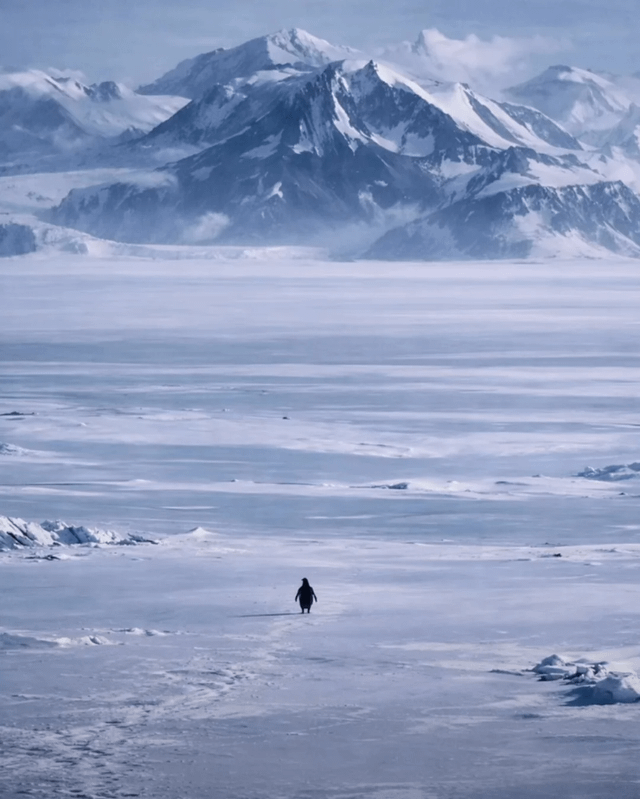
The sensation and virility are not about the penguin. It’s not about Antarctica, and it’s not about the documentary.
It’s about how we see ourselves in that solitary walk — in the pause, in that conviction of walking away from safety and familiarity.
The penguin is not our voice; it’s the rebel we saw in that lone walk that we connected with the most.
The human instinct is not about limitations or playing small, it’s about expansion, growth, and breaking shackles.
Sometimes our environment is not conducive to our mind, soul, or well-being, but we stretch, we drag, we mold ourselves to survive in it.
We continue living in environments, relationships, careers, and marriages that drain us, break us, and suffocate us not because we truly choose to, but because we feel helpless and weak to take the bold action of leaving.
We tie ourselves more strongly to systems than to our inner selves.
We fear breaking the system, even if it means breaking ourselves.
While we stand in such a tumultuous life state, where our soul constantly cries for relief and doesn’t want to keep dying inside, our minds scare us with worst-case scenarios. We become paralyzed trying to keep things “normal.”
We spend our lives making space for the body, its needs, its comfort, its survival.
To live “well,” we keep adjusting, accommodating, and tolerating. But in doing so, we often ignore the quiet collapse happening within us.
While we protect our outer appearance, the inner foundation, the soul, begins to crack.
And no one sees it, not even us, until the damage runs deep.
The penguin’s lonely walk becomes a reminder.
A mirror. A question.
Are we caring for what truly keeps us alive inside, or just maintaining the show on the outside?
Because when the soul begins to derail, no place in the world feels like home.
And no amount of comfort can save us from the emptiness within.
The penguin’s walk resonates with a suppressed human emotion, the desire for a breakthrough, the urge to act fearlessly and set the soul free, even if the body loses comfort, safety, resources, social circles, and everything it depends on for survival.
Humans are not designed to shrink. The soul longs for evolution, but something stops us from following our instincts, our fear, doubt, lack of courage, or conditioning from a social structure that doesn’t allow such rebellious, solitary, or seemingly nihilistic choices.
So when we saw the “nihilist penguin,” unbothered by what he was leaving behind and determined only to follow his path, it struck a chord within us. We saw a mirror showing us what we have been neglecting all our lives.
It felt like a direct conversation with the soul, awakening the urge to protect it because life cannot stand steady when its foundation, the soul, is on shaky ground.
What we felt when we saw that Penguin Walk
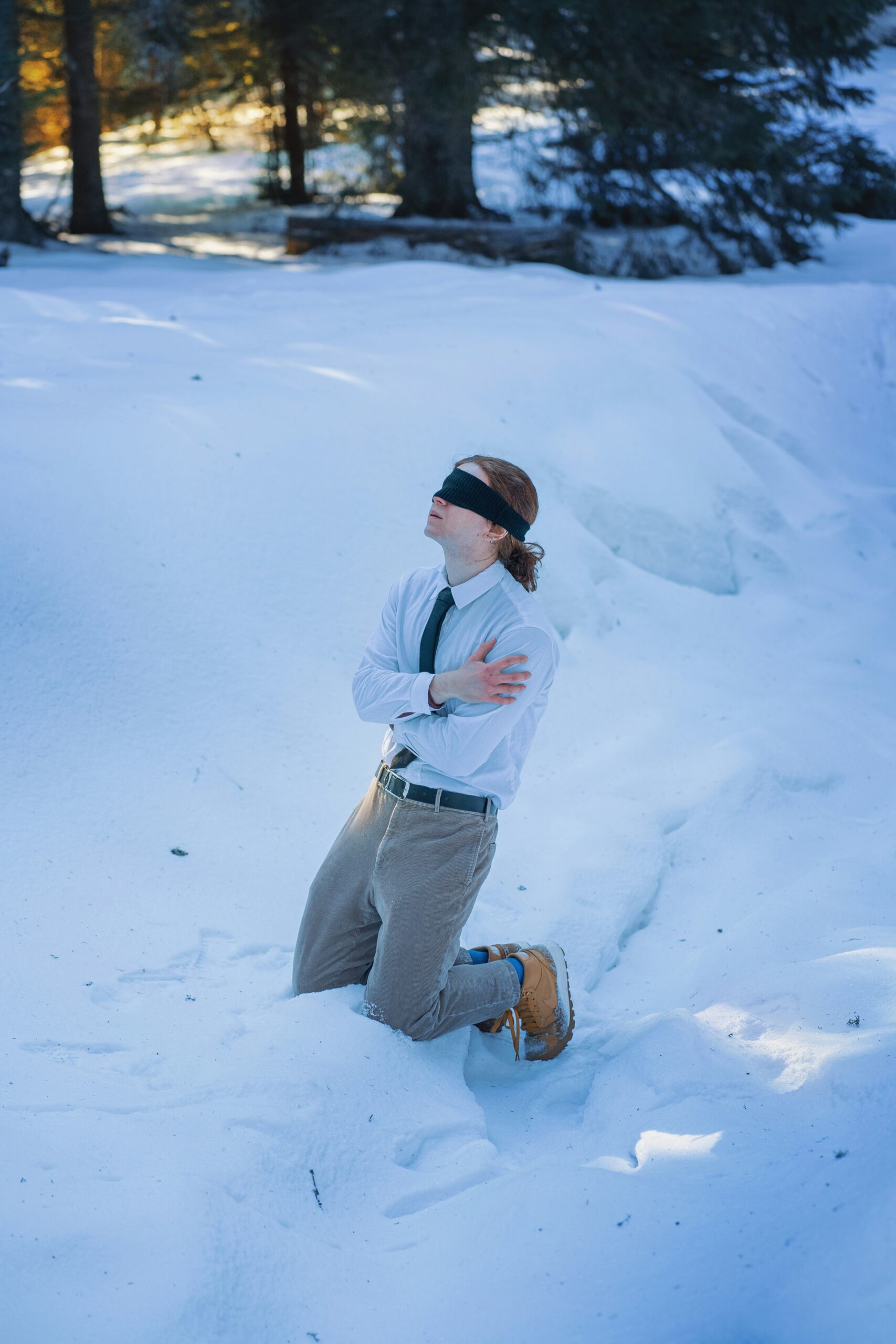
Not everyone will understand your Path
and that’s okay
There wasn’t one single emotion felt by everyone.
The penguin’s lone walk evoked different feelings in different individuals, depending on what phase of life they were in.
The penguin walking away from its safety and food showed the courage it seemed to build inside to take a bold step, even with no certainty of a secure destination.
So, people who are at a point in life where they want to break the shackles of comfort to pursue something without a clear roadmap or perfect blueprint saw this penguin as motivation.
A feeling of courage and willpower they had been trying to cultivate, suddenly, the penguin’s daring step of walking alone filled them with a rush of inspiration.
As if humans are just waiting for a small external stimulus, some real motivation, to unlock their mental barriers and take action toward something they have long been trying to gather strength for.
People saw a reflection of a part of themselves in the penguin, the part that wanted to take action, pursue purpose, and become fearless and doubtless. The penguin became an image they visualized for themselves.
So many who had been ruminating on a major goal, purpose, or dream but weren’t able to take action because it demanded risk, courage, and uncertainty suddenly felt a deep internal shift. The viral penguin meme sparked an instant readiness to take the leap.
Another, perhaps even more powerful emotion people drew from the penguin walking alone into the unknown mountains was the loneliness of modern life.
They saw the penguin as tired and lonely even in its place of comfort, among its own kind.
When it walked away from its familiar space knowing it was cold, silent, dangerous, or even fatal, it still went, because staying felt like burying that loneliness inside.
Sometimes we are not truly living, we are dragging ourselves through life.
We grow tired of accommodating, compromising, and sacrificing just to sustain the environment we are in. We feel the toxicity in relationships, the fatigue of soul-draining jobs, or a lack of alignment with the people around us.
We have a life, but feel lifeless inside.
Even in our so-called safe space, we feel we are losing something essential, our individuality, our inner calm yet we struggle to step out of this illusion of comfort.
In the penguin, we saw that tired and lonely part of ourselves that wants to preserve the soul, even if it means leaving everyone behind.
The comfort and safety that stop us from walking away, the penguin’s lone march becomes a wake-up call to leave what does not nourish our soul. Protecting your peace sometimes means disappointing the version of you that was built to please everyone.
It is a sad paradox of life: we keep accommodating things that are slowly making us lifeless inside.
We rush to make a living, but slowly drift away from making a life.
The penguin chose soul over body and this is the choice many of us struggle to make.
The penguin becomes an inspiration to detach from what no longer serves our growth.
Sometimes we have to separate from the crowd to truly meet ourselves. Sometimes we need distance even from our own patterns to understand what our soul truly needs to evolve.
The penguin walking away is not about abandoning life and becoming a loner. It is about turning inward, knowing yourself, practicing detachment, searching for deeper truths, shifting attention away from temporary material things and toward the enduring source within.
For many of us, the penguin’s lone walk carries a message: it is not about leaving the world to find yourself, but about not letting the world stop you from going within.
The root of this reflection is simple:
To exist in the world without being defined by it.
“I belong to this world, but the world does not live inside me.”
The penguin walking away is not a sign of leaving the world, but of leaving the parts of ourselves that keep us overly attached to worldly things.
It is in this self-redesign and reinvention that we become truly free within this worldly cage and begin working toward the only purpose we are truly here for: evolution.
What the Penguin Walk teaches us
Even if the human perception of the nihilist penguin is unrealistic, if it brings a deeply empowering message that serves as a blueprint for an inward journey, it is worth embracing.
Humans project significance onto stories that often say more about us than about the event itself.
If we don’t focus on the science behind the penguin’s unusual behavior and instead feel the emotion it evokes in us, it no longer remains just a clip, a walk on ice by a small animal. We begin to see it as an act of courage, resilience, and a willingness to step out of comfort and security in order to find ourselves.
The penguin becomes symbolic of how we imagine ourselves in our most rebellious and authentic state.
1. Safety is not always where there is Shelter
Safety is not always about having resources, protection, or physical support.
Sometimes safety means being in a place where we can be our truest selves where we don’t have to hide, suppress who we are, or wear a mask just to fit in.
The penguin seems to represent this realization, choosing authenticity over comfort. It invites us to reflect on whether we are truly growing and evolving in our so-called safe and comfortable spaces. If not, perhaps it is time to reassess our choices and make a bold move of our own.
2. Purpose Isn’t Always Clear, but It’s Worth Pursuing
When we step into the unknown, we can no longer remain the person waiting for comfort and ease. We must transform to face the new path ahead. And in that transformation, we slowly build strength and rise into a more evolved version of ourselves.
3. Solitude Is Not Weakness
The penguin’s solitary walk can be seen as a symbol of self-connection. When we are able to sit with ourselves in peace, without depending on others for happiness, we begin to embody true self-love.
Only those who learn to be whole on their own can bring genuine joy into companionship.
4. Breaking Away from the Crowd Is Not Betrayal, It’s Self-Discovery
Sometimes we must unlearn the conditioning that keeps us small. Choosing a path that brings us closer to ourselves, even if it creates distance from others, is not wrong, it can be one of the most important decisions for our well-being.
Maybe the penguin was never trying to teach us anything.
Maybe it was simply walking, lost, disoriented, or following instincts we may never understand.
But in that quiet, uncertain walk across endless ice, we found something we had been searching for within ourselves, the courage to question our comfort, the strength to face our loneliness, and the longing to choose a life that feels true instead of just safe. Because growth rarely comes with a map it asks us to walk before we feel ready.
The penguin may not know our story.
But somehow, we saw ours in its footsteps.
