
Empathy Fatigue: When empathy becomes exhaustion in a good man.

Even at their breaking point, empaths don’t blame. They look within to recalibrate. They introspect to build healthier ways of expressing empathy.
Yes, I am speaking to you — the empath who is facing empathy fatigue.
You feel you have a vast room in your heart to love people, no matter what. Your sense of identity finds validation when people who never found comfort or peace anywhere else, find it with you.
You seem to be installed with a software called “Understanding Without Judging.”
You are a Ph.D. holder in love, with little room for selfishness.
You often see yourself as a representative of a higher power, sent to elevate and heal the world even if it comes at the cost of carrying the baggage of others’ wounds.
You don’t perceive this as a sacrifice. Instead, it fuels your empathy even more. There is a profound joy in knowing that you were a reason behind someone’s growth or happiness.
Even when there is an urge to retort, you choose not to return negativity. You trace behavior back to its root and respond with the intention of breaking negative patterns rather than perpetuating them.
So, what goes wrong then?
Why do you reach your breaking point?
Why does the very empathy you embodied like a hallmark suddenly become your wound?
Listen, empath — you are human.
When the superhuman within you takes the lead, remind yourself not to stretch beyond what your soul can hold.
The gift of empathy turns into a curse the moment you move from understanding people’s pain to accommodating their negative patterns that stem from unhealed wounds.
A wound that remains untreated slowly morphs into control, ego, and manipulation.
This is where empaths are taken for granted, misused, manipulated, and controlled so that others’ wounded projections can continue unchecked.
Because healing demands change, and change is uncomfortable, you become the easier option.
Choosing love does not mean it must be offered to spaces unwilling to do the inner work.
Does empathy mean allowing people to harm you in the name of understanding them?
Does empathy ask you to bleed while others remain untouched?
Does empathy require enduring mistreatment just to prove you care?
Does empathy mean surrendering your boundaries to preserve someone else’s comfort?
Just because you have the capacity to accommodate does not mean you should suffocate yourself. This is not how empathy prospers. This is how it exhausts.
Empathy, too, needs boundaries.
To be empathetic is a strength. Allowing it to be misused is not.
Boundaries do not make you less empathetic, they make your empathy sustainable.
So how does a true empath act?
A true empath says:
“I understand your behavior, your pain, your struggle, your wounds. But I am not a surface for you to project them onto. I won’t judge what hurt you, but I won’t participate in what you refuse to heal. I won’t judge your scars, but I won’t host your unwillingness to grow.”
Compassion ends where the refusal to heal begins.
The exhaustion of an empathetic person does not come from witnessing pain. It comes from watching wounds remain unattended and turn into toxic patterns.
Every harmful trait is an unhealed wound. The wound itself is not the problem; the unhealthy pattern it creates is. And it is these patterns that exhaust the good ones who keep offering understanding.
You Are Delaying Their Healing
When you accommodate harmful traits in the name of empathy, you are not helping others heal, you are delaying it. Instead of allowing space for accountability, you end up feeding the very behaviors they need to outgrow.
Your acceptance of unhealthy patterns does not just exhaust you; it allows others to remain comfortable in their darkness.
Withholding space for negative projections is not cruelty, it is necessary for growth.
Unhealthy Patterns Survive Where There Is No Resistance
It is rarely a conscious choice to misuse empaths. But when unhealthy behaviors meet no resistance, they stay. The lesser a pattern is challenged, the more at home it feels.
Staying without confronting unhealed wounds or inviting growth only weakens the impulse to evolve.
Why Do You Choose Unhealthy Empathy?
This, too, is rooted in a wound — not pure love.
If it were only love, it would empower you, not exhaust you.
So, what lies beneath this draining empathy?
LACK.
A lack of self-love.
When you believe love must come from outside you, its absence creates a sense of deficiency. Without realizing it, you begin sourcing from others what should have been rooted within.
You stretch beyond your limits to earn love. And when it still doesn’t arrive, you don’t just feel unloved, you feel unworthy.
You turn against yourself.
Your self-worth begins to shake, not because love disappeared, but because you made external affection the measure of a meaningful life.
To desire love is human. To allow it to control you is harmful.
The only source of love that never depletes is the divine within.
Until you are rooted in love that is unwavering, unconditional, and eternal; fear of abandonment, rejection, and disapproval will persist.
The thought “If I stop understanding them, I will lose them” is born from lack.
Self-love is the elixir that heals unhealthy empathy.
Unhealthy empathy is not excessive kindness; it is unresolved pain seeking safety through accommodation.
The Evolution of Empathy
Do not try to change the world that misused your empathy. Do not let bitterness replace compassion. Do not carry grudges against those who projected their wounds onto you.
The most powerful way of returning to self is awareness.
When you choose to check in and heal, you don’t just step into power, you become its embodiment. And that transformation is felt, not argued.
It is about becoming light by working through your shadows. And in doing so, you not only protect your light, but you also inspire others to transform theirs.
Healthy empathy begins with discernment.
The Journey of a Wound: 3D, 4D, and 5D Consciousness
Behaviors and negative patterns are best understood when you recognize the level of consciousness they stem from. When you realize that people do not operate from the same level of awareness, your lens for interpreting their actions shifts.
Understanding how people function across different dimensions of consciousness (3D, 4D and 5D) allows you to offer empathy where it truly serves growth rather than turning it into a free service that enables stagnation.
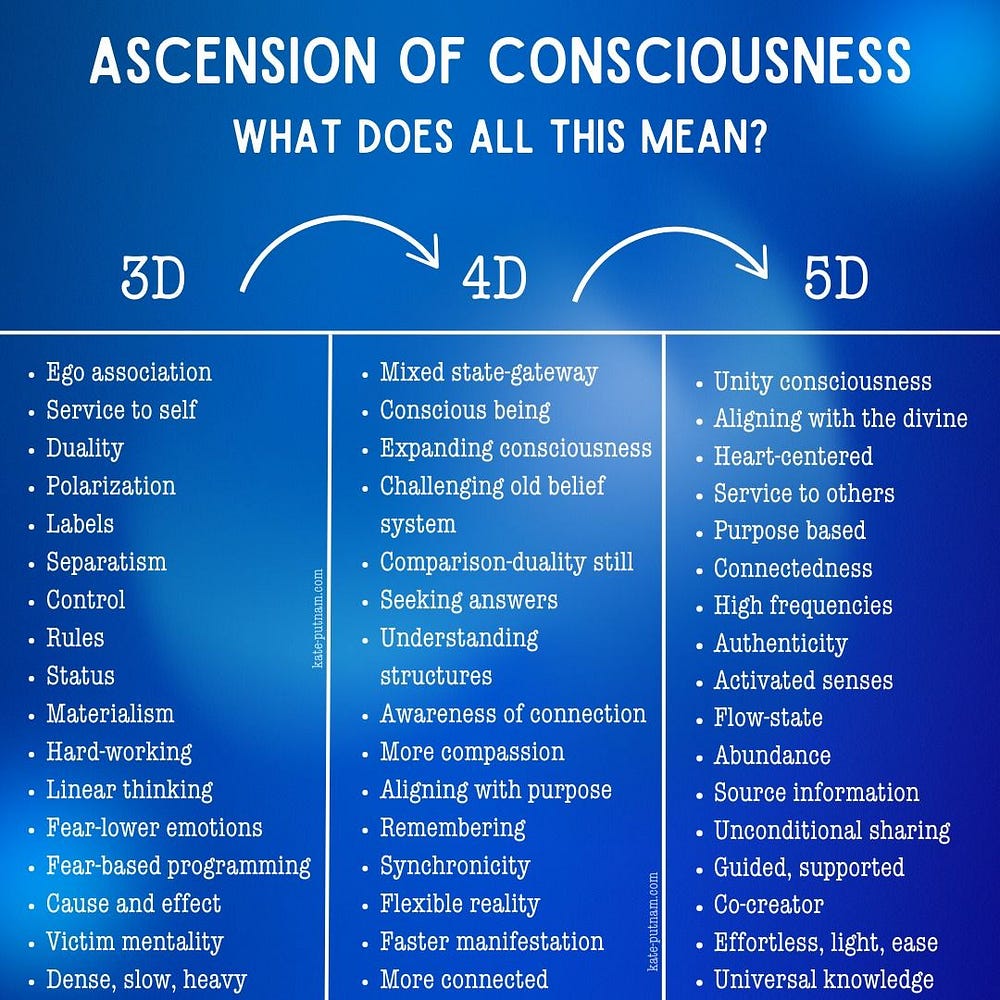
3D: The Wound Is Unconscious
Pattern: Survival | Reaction | Projection
How it shows up:
- Unawareness of wounds.
- “This is just how I am” mindset.
- Pain projected outward.
Unhealthy expressions:
- Anger → control, dominance
- Abandonment → jealousy, manipulation
- Rejection → withdrawal, superiority
- Insecurity → validation-seeking, people-pleasing
Inner belief: “People are the problem.”
How it exhausts empaths:
- You become an emotional dumping ground.
- No accountability exists.
- The wound aggressively defends itself.
Status of Healing: The wound is acting, not being seen.
4D — Awareness Without Release
Pattern: Awareness but not taking action | Spiraling
How it shows up:
- Acknowledges wounds but avoids discipline.
- Talks about trauma without behavioral change.
Unhealthy expressions:
- Justifying harm as “my trauma”.
- Apologies without transformation.
- Expecting understanding without responsibility.
Inner belief: “I know I’m wounded, so this is understandable.”
How it exhausts empaths:
- Emotional processing without progress.
- Empathy delays healing.
- Compassion becomes permission to continue projecting their patterns.
Status of Healing: Partial. The wound is seen but not treated.
5D — The Wound Is released
Pattern: Ownership | Responsibility | Freedom
How it shows up:
- No identification with wounds.
- Pain acknowledged and no more unhealthy projections.
- Healing is chosen as a responsibility.
Healthy expressions:
- “These wound hurts, and I choose to heal.”
- Boundaries are respected.
- Accountability replaces explanation.
Inner belief: “This happened to me, but it does not control me.”
How it makes empath feel safe:
- Empathy is received, not consumed.
- Support from empath does not enable negative patterns.
- Relationships feel mutual.
Status of healing: Wound is released.
The Evolution
- 3D: The wound controls the person.
- 4D: The person understands the wound but still serves it.
- 5D: The wound alchemizes to becomes wisdom.
Healing is not erasing pain or demanding compensation.
Healing is no longer needing your wound to explain your behavior.
At 5D:
- Empathy nourishes instead of drains.
- Compassion coexists with boundaries.
- Pain becomes clarity.
Healing completes the moment a wound no longer needs an audience.
If you aligned with my words, found them helpful, find more such life insights on my Instagram page:
If this piece felt like company when you needed it, buy me a coffee here👇
Ko-fi☕😊
